

Material impacts, risks and opportunities (IROs) and their interaction with strategy and business model (ESRS 2, SBM-3)
The table below provides an overview of the results of our double materiality assessment of material impacts and risks relating to our own workforce.
| S1 Own workforce | ||||
|---|---|---|---|---|
| Subtopic |
Impact / Risk /Opportunity |
Time horizon | Position | Description |
| Training and skills development | Positive Impact | Short-, medium- and long-term | Own Operations | TUI creates a positive impact in the short-, medium- and long-term on their own employees with increasing competence, confidence, growth and organizational innovation as well as competitiveness due to an established training and skills development and support of their career development. Examples for training and skills development for its employees are various learning and development opportunities, such as on-the-job training, instructor led sessions both face to face and virtually, coaching, or mentoring. The career development exists of providing feedback, guidance, and recognition. |
| Employment and inclusion of persons with disabilities | Positive Impact | Short-, medium- and long-term | Own Operations | TUI creates a positive impact in the short-, medium- and long-term on their own employees with disabilities based on diversity, inclusion, and empowerment, as well as its organizational culture and performance. This impact is generated through opportunities, reasonable accommodation, support services and the absence of any form of discrimination, harassment, or stigma in the workplace. |
| Diversity | Positive Impact | Short-, medium- and long-term | Own Operations | TUI values and respects the diversity of its employees, customers, and stakeholders, and strives to create an inclusive and equitable workplace where everyone can contribute and thrive. TUI's diversity impacts its employee engagement, innovation, and performance, as well as its customer satisfaction and social responsibility. |
| Gender equality and equal pay for work of equal value | Positive Impact | Short-, medium- and long-term | Own Operations | TUI promotes gender equality and equal pay for work of equal value among its employees, by ensuring that men, women and diverse have the same rights, opportunities, and responsibilities in the workplace, and that they receive the same remuneration for the same work or work of equal value. TUI's gender equality and equal pay for work of equal value impact its employee fairness, recognition, and motivation, as well as its organizational culture and performance. |
| Work-life balance | Positive Impact | Short-, medium- and long-term | Own Operations | TUI creates a positive impact on its own employees' work-life balance such as their well-being, happiness, and performance, as well as its organizational culture and reputation in the short-, medium- and long-term, by offering them flexible and diverse working arrangements and by providing them with various benefits, such as parental leave, childcare support, or wellbeing programs. |
| Adequate wages | Positive Impact | Short-, medium- and long-term | Own Operations | TUI creates a positive impact in the short-, medium- and long-term on their employees by paying adequate wages, which are aligned with the market rates, the living costs, and the performance and qualifications of the employees. TUI also ensures that its employees receive their wages on time, and that they are informed of their wage components and deductions |
| Adequate wages | Risk | Short-, medium- and long-term | Own Operations | TUI faces the risk of higher costs in the short-, medium- and long-term due to filling potential vacancies by hiring employees from agencies or externals at higher costs. |
TUI People Strategy (ESRS S1-1)
TUI is a people business and our people are at the heart of everything we do. Our vision is to be digital, engaging and inclusive. Our People Strategy forms the centrepiece for the implementation of this vision. TUI’s success largely depends on the engagement of its employees. It is therefore crucial for us to define who we want to be as a Company and what it means to work for TUI. Our People Strategy with its six key areas of action forms the basis for implementing this vision and addresses all the material impacts and risks identified. The activities and areas of action derived manage the impacts and risks relating to our employees in a targeted manner.
Key areas of action of our People Strategy
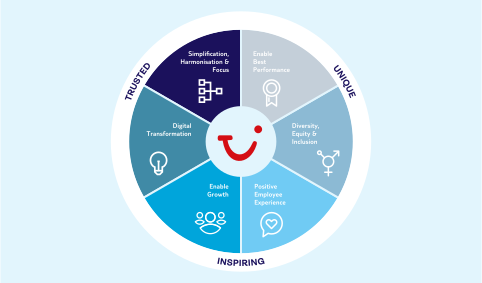
- Enable Best Performance: the actions empower employees to perform at their best. This objective is served by a broad range of development and learning formats.
- Diversity, Equity & Inclusion: the actions create an environment where employees feel accepted, appreciated and included. All employees have the same career opportunities and receive equal pay for work of equal value.
- Positive Employee Experience: the actions create an environment where people feel comfortable, trusted and able to work flexibly.
- Enable Growth: the actions ensure that new employees are recruited in a demanding labour market. They ensure talent succession and include the launch of a new TUI Careers website to strengthen our social media presence.
- Digital Transformation: the actions centre on harmonising and digitising our HR systems and the use of artificial intelligence to facilitate data-driven decision-making.
- Simplification, Harmonisation & Focus: our measures are guided by the principles of simplification, harmonisation and focus in order to realign and enhance the efficiency of our organisational structure in HR by consolidating expertise globally.
The present report does not include actions falling under Simplification, Harmonisation & Focus or Digital Transformation as these topics are not covered by Sustainability Reporting.
The People Strategy applies to TUI Group’s own workforce. Employees working at Riu Hotels & Resorts are not included in the policies, actions or targets of TUI’s People Strategy since they are the responsibility of Riu’s management team. Implementing the strategy is the responsibility of the Executive Board, the Group Executive Committee (GEC) and the HR Leadership Team (HRLT) and contributes to three Sustainable Development Goals (SDGs) of the United Nations: Gender equality, Decent work and economic growth, and Reduced inequalities. TUI uses various engagement formats to understand the interests of its employees and aligns its People Strategy accordingly. For further information, please refer to the section on Processes for engaging with own workforce and workers’ representatives. Our strategy is communicated via the intranet (Smile), via live chats and at a range of other events. The strategy is implemented through further initiatives such as the Diversity, Equity & Inclusion Strategy (DEI Strategy), all of which refer back to TUI’s overarching strategy. The People Strategy is based on a holistic concept and applies right across the Group. For a more detailed description, the actions and targets defined for each area of the People Strategy have been outlined with a view to the positive impacts and risks for employees.
Managing impacts, risks and opportunities
Enable best performance (ESRS S1-13)
Management approach Look@Learning
TUI uses the global Look@Learning approach, launched in April 2025, to strengthen the skills of its employees in a targeted manner and with that enhance the Company’s competitiveness. The key objective is to create a consistent, inclusive learning journey with training and skills development programmes for all employees. Creating a global learning solution underlines TUI’s commitment to developing its employees and executives, supports the business strategy, promotes innovation and facilitates TUI’s business success. These development opportunities help TUI attract and retain high-performing employees. TUI’s employees are thus empowered to achieve their potential and acquire the skills they need to succeed in an evolving global environment. Look@Learning offers four modules:
- Self-paced learning which takes place online
- Virtual training programmes
- Instructor-led virtual or face-to-face sessions
- Peer-to-peer/social learning in the framework of a mentoring or coaching concept.
In developing the approach, attention is explicitly paid to the interests of stakeholders. Voluntary and anonymous feedback helps to identify areas in which additional support or adjustments are needed, triggering continuous improvements to the learning approach. Based on a communication plan, Look@Learning will be made available to all TUI employees and can be tailored to the needs of all employees with access to our global learning platform TUI People (SAP Success Factors). The plan includes monthly updates of the policy, communication via Smile and the Learning Lounge, and integration into the TUI People learning platform. Information is also shared via webinars, the People Development & Culture teams, leaders and the HRLT. The initiative for this project was taken by the Chief People Officer (CPO) and the Director of Global Talent, People Development and Culture in Learning & Development.
Targets
The management approach and the corresponding actions were introduced and implemented in the financial year under review. Targets are to be set in the forthcoming financial year. The success of Look@Learning to date has been gauged by employee interest in the management approach and the monthly updates on new learning options available. Since the launch of the programme, the monthly updates and information about the modules on offer have been accessed by 10,489 employees.
Actions
As part of the Look@Learning approach, TUI has developed personalised training for its employees. Collectively, these different learning methods form a comprehensive learning model that supports the effective acquisition, application and retention of knowledge and skills. During the first stage, in addition to these methods, TUI is offering a Skills for All programme with tailored learning for all employees and a Skills for Leaders programme for leaders. During the second stage, a Skills for Business programme will be rolled out to several business units. With Skills for All, TUI has defined appropriate learning topics for its employees around the world. The programme helps employees to develop the skills they need in order to excel in their respective roles and achieve their career aspirations. Key topics are communication skills, change, critical thinking, inclusion, technical skills and personal effectiveness. The Skills for Leaders programme covers globally relevant learning topics for business leaders. It enables them to develop their skills, support the development of other employees and achieve their career aspirations. The key learning topics, therefore, are coaching and developing other employees, delegation and empowerment, and emotional intelligence.
The Look@Learning programmes apply to TUI’s own employees, with limited availability for seasonal employees in Hotels & Resorts. The first stage of Skills for Leaders and Skills for All launched successfully in April 2025. The second stage with the individual learning approach for separate business units will follow in financial year 2026.
Diversity, Equity & Inclusion (ESRS S1-9/12/16)
Management approach “Come as you are”
“Come as you are” is a Group-wide approach to diversity, equity and inclusion which further strengthens TUI and opens up numerous opportunities. Our approach is based on three pillars:
| People and culture | Inclusive leadership | Community |
|---|---|---|
| People and Culture helps to attract, recruit, develop and retain a diverse workforce. The focus is on assessing inclusive recruitment processes, fair promotion criteria, training programmes and workplace accessibility, to ensure that everyone can fulfil their potential without bias. Another objective is to encourage and support global and local networking groups, involving them in decision-making and enabling them to provide feedback to help achieve ambitions. Progress is monitored and reported to help track it. | Inclusive leadership is designed to build trust and create open working cultures in which everyone can excel; this makes inclusive leadership essential. The leadership team is responsible for promoting the “Come as you are” approach and integrating it into performance evaluations and goal setting. The development of cultural competence among leaders will help them to understand and recognise discriminatory behaviour and initiate potential countermeasures, thereby fostering a more inclusive culture. TUI supports and develops diverse employees equally throughout their careers. This pillar includes equal pay, as well as participation in global initiatives such as allyship and women in leadership programmes. | Community fosters global partnerships and creates a determined commitment to social responsibility and ethical practices. TUI wants to play a part in changing the world beyond the Company, supporting underrepresented groups through the TUI Care Foundation. TUI seeks feedback through benchmark data on whether it is seen as diverse and inclusive. The goal is to attract potential employees and promote the sense of community and corporate loyalty among existing employees. |
The management approach “Come as you are” applies to TUI’s own workforce. The approach is shaped by the interests and needs of a diverse range of stakeholders, ensuring it is inclusive and effective, and aligned with broader commitments. Employees are included in the TUIgether+ survey with its comment function to ensure their perspective is reflected. Additionally, leadership and HR are affected by playing a key role in implementing the policy. This approach is communicated both internally and externally to ensure alignment and engagement with all stakeholders. Internal communication takes the form of company-wide announcements, launch events, HR all-hands meetings, and regular workshops and discussions. External communication is available through the corporate website, the careers site, and the statements on job alerts. TUI’s management approach for Diversity, Equity and Inclusion aims to prevent discrimination and supports equality for TUI employees. It also tackles the grounds for discrimination, such as race, ethnicity, gender, sexual orientation, national origin, gender identity, disability, age, religion, political views and social origin, as well as other forms of discrimination. TUI pays specific attention to people from groups at particular risk of vulnerability and has committed itself to be an inclusive employer with internal benchmarks for diversity, like the targets mentioned below. TUI is also subject to legal requirements, which differ between countries and local jurisdictions. TUI complies with local requirements, e.g. the quota for employees with severe disabilities in Germany. The management approach is communicated to all employees to foster an awareness of preventing discrimination. In addition, there are specific training programmes about inclusion for all employees. If TUI becomes aware of any complaints or cases of discrimination, e.g. through the TUI Speak Up Line, remedial measures and processes are initiated. Responsibility for the implementation of “Come as you are” lies with the CPO, the HRLT and the Head of People Development and Culture at TUI.
Targets
| People and culture | Inclusive leadership | Community |
|---|---|---|
|
TUI’s target is to be recognised by 2030 as an inclusive employer, with the aim of achieving a score of 85% or more in an internal DEI survey. In the financial year under review, TUI worked towards the first target by carrying out a comprehensive impact assessment on the accessibility of office buildings at the head office sites, drew up an Inclusive Hiring Guideline, carried out neuroinclusion training programmes with external providers and launched a global project focusing on disability with supporting targets. For the second target, TUI is currently in talks with various providers to determine the benchmarking option. A final decision on measuring target achievement is still outstanding. Progress towards target achievement is measured by the Inclusion and Authenticity Score in the TUIgether+ survey. In the financial year under review, Authenticity rose by one percentage point from 83 to 84. Inclusive leadership also improved by one percentage point from 73 to 74. |
TUI aims to increase the proportion of women in leadership positions to 35% by 2026. The target of 35% women in leadership positions was achieved in the financial year under review due to a changeover of the reporting logic and will be examined for a potential need for adjustments in the forthcoming financial year. Target achievement will be tracked every quarter with specific reporting to the GEC, measuring the proportion of women in leadership functions in the light of the targets fixed. | By December 2026, TUI aims to have established at least five new accreditations for DEI partnerships. In the financial year under review, TUI became a member of the Business Disability Forum. The current target achievement status is regularly reported to the HRLT and tracked by that body. |
The targets for the “Come as you are” approach are likewise divided into the three pillars: People and Culture, Inclusive Leadership and Community. The target values relate to TUI’s own employees. All Diversity, Equity and Inclusion targets were defined based on various internal calculations within the departments, taking into account challenges and potential for improvement. Ultimately, they were approved by the Executive Board. Since all targets for Diversity, Equity & Inclusion are absolute targets, no baseline year applies. Various stakeholder groups were involved in the target setting process. Apart from senior leadership and the HRLT, additional interaction took place with the GEC and all Managing Directors. Moreover, various colleagues across TUI Group, as well as employee networking groups and graduates, took part.
Actions
To foster positive impacts on its employees in the field of Diversity, Equity & Inclusion, TUI implemented the following actions.
| People and culture | Inclusive leadership | Community |
|---|---|---|
| TUI plans to develop an inclusive talent acquisition process. The current recruitment practice will be evaluated, as will the understanding of possible opportunities and gaps in practical DEI implementation. The next step will be to suggest improvements and train the recruiters and managers leading the process. Furthermore, TUI plans to conduct an impact assessment on accessibility in the workplace. The goal is to implement changes that will enable TUI to attract and retain people with disabilities. A report will outline the necessary changes as well as the cost and priorities for Company businesses. The communication of the findings and the implementation of the actions to recruit people with disabilities will be planned on that basis. The actions mentioned above are divided into smaller tasks with a timeframe to execution of 6-12 months. For the accessibility assessment, TUI is setting up working groups and liaising with an external provider called Access Able. | A key area of the programme is to create a working environment offering women equal opportunities to lead, grow and succeed. A review of existing guidelines across all functions and topics helps evaluate and update those guidelines to ensure they support gender equality, for example by offering flexible working arrangements and parental leave. Cultural change comprises initiatives that challenge bias and promote and recognise inclusive leadership. Progress is tracked with the aid of accountability actions such as the use of clear metrics and reporting mechanisms, which also ensure that TUI is held to account. The programme is still in its early stages, with the key areas currently being developed. It is not possible yet to set a time horizon for completing the action. | TUI aims to develop external partnerships with leading organisations to amplify its positive impact, drive systemic change, and create a more inclusive environment for colleagues, customers and communities. Key content includes enhancing DEI expertise and leveraging external partnerships to bring cutting-edge knowledge, tools and resources into TUI. The actions for developing partnerships with external organisations and the TUI Care Foundation have already started and should be completed by 2026. The external partnerships workstream has already identified five potential partnerships that align with the DEI targets and offer opportunities to drive progress. These partnerships include the International LGBTQ+ Travel Association (IGLTA). The next steps will be to finalise the partnerships, develop action plans, engage employees and measure the impact. |
Equal pay
The strategic goal is to gain insights into the extent to which a gender pay gap exists at TUI and to define actions to reduce potential gaps on a global and local basis. Key actions for equal pay at TUI include collecting the remuneration data of all employees to calculate the gender pay gap. TUI has established a standardised global reporting system for that purpose, using annual data to calculate the unadjusted and adjusted gender pay gap. The unadjusted gender pay gap reflects the difference without accounting for factors such as job family, role level or other relevant comparators. For the purpose of defining effective targets, TUI additionally determines an adjusted gender pay gap metric, which compares average pay levels between female and male employees within comparable job families. This approach ensures a like-for-like comparison as it takes account of structural differences and therefore provides a more accurate reflection of equal pay across similar roles. This forms part of our broader efforts to promote equal opportunities. TUI is committed to identifying potential structural inequalities at an early stage and addressing them through targeted measures. The analysis covers 48,735 employees in 45 countries. The actions are continually implemented, with gender pay gap calculations carried out annually. The effectiveness of actions to address impacts and risks is measured through the annual tracking of the gender pay gap.
All actions outlined in the DEI section relate to TUI’s own workforce. The effectiveness of the actions in addressing impacts and risks is measured indirectly based on progress towards target delivery.
metrics
Diversity
| Gender distribution in number of employees (head count) at top management level | ||||
|---|---|---|---|---|
| 2025 | 2024¹ | |||
| No. of employees | in % | No. of employees | in % | |
| Male | 105 | 65.6% | 97 | 66.9% |
| Female | 55 | 34.4% | 48 | 33.1% |
| Other | 0 | 0.0% | 0 | 0.0% |
| Total | 160 | 100.0% | 145 | 100.0% |
| ¹ Previous year's figures are unaudited. | ||||
At TUI, the top management level consists of global leaders who determine and drive the business strategy. The relevant population for this data point is determined on the basis of a qualified analysis, in which all employees are grouped into bands between 1 and 6, with band 1 being the Executive Board level. For this data point, the population consists of top management in band 2, i.e. Executive Board level minus 1. This metric is defined as gender distribution among employees at the top management level.
| Age structure of employees | ||||
|---|---|---|---|---|
| 2025 | 2024² | |||
| No. of employees | in % | No. of employees | in % | |
| <30 years old¹ | 15,435 | 30.0% | 16,995 | 32.5% |
| 30–50 years old | 23,912 | 46.5% | 23,926 | 45.8% |
| >50 years old | 12,093 | 23.5% | 11,323 | 21.7% |
| Total | 51,440 | 100.0% | 52,244 | 100.0% |
| ¹ In financial year 2024, the corresponding age group comprised individuals under 31 years of age. An adjustment was made in financial year 2025 to comply with CSRD requirements. | ||||
| ² Previous year's figures are unaudited. | ||||
This metric is defined as number of employees broken down by age groups “Under 30 years”, “30-50 years” and “Over 50 years”, excluding executives, interns and Riu Hotels & Resorts employees.
remuneraiton metrics (Gender Pay Gap and total remuneration)
| Gender pay gap | |
|---|---|
| 2025 | |
| Gender pay gap in % – unadjusted | 21.78 |
The gender pay gap is defined as the difference in average pay between female and male employees, expressed as a percentage of the average pay of male employees. The calculation includes all active employees with permanent or temporary contracts, excluding the Executive Board of TUI AG, non-guaranteed hours employees and interns.
| Total remuneration | |
|---|---|
| 2025 | |
| Total remuneration | 33:1 |
This metric is defined as the total annual remuneration ratio of the highest paid individual to the median annual total remuneration for all employees (excluding the highest-paid individual). Due to the even number of employees (a total of 48,734 employees excluding the highest-paid individual), the median does not reflect the remuneration of an individual employee, but rather the average of the remuneration of two employees.
Positive Employee Experience (ESRS S1-15)
Management approach
In order to strengthen the work-life balance, TUI developed a management approach for the creation of a positive employee experience which covers different aspects of the work-life balance. The management approach is set out in the TUI Workwide approach and in the TUI Way of Working. TUI aims to holistically promote the wellbeing of all employees and anchor it in TUI’s culture. The goal is to ensure that responsibility is shared between the leadership level, managers and all employees. Solving key wellbeing challenges is designed to enhance employee engagement, productivity and retention.
The management approach related to Positive Employee Experience applies to TUI’s own workforce and is aligned to global best practices. However, it also entails regional flexibility in order to meet local needs. Moreover, the management approach enables employees to work from another country for a maximum of 30 working days per year. Employees can choose from a variety of countries with the exclusion of locations affected by war or civil or political unrest. Other potential exceptions relate to employees who are required to work from a specific location or a non-flexible workplace due to the nature of their tasks, e.g. employees in customer-facing roles in a travel agency. In order to take account of the views and interests of its key stakeholders, TUI’s employees, the Company carries out an annual employee survey. The results are used as input for the further development of the management approach. The topics addressed by the management approach are communicated separately via Smile. This channel is also used to publish changes and updates. Responsibility for the implementation and examination of the management approach in accordance with the general People Strategy lies with the Executive Board, the GEC and the HRLT.
Targets
For financial year 2025, the Supervisory Board defined sustainability targets for the members of the Executive Board. The target relating to Social is to increase employee satisfaction by 2 percentage points. Target achievement is measured via the results of the annual TUIgether+ survey and evaluated by the Supervisory Board. For the financial year under review, employee satisfaction matched the prior year’s level.
For further details, please refer to section II. Overview: Individual remuneration of the members of the Executive Board in the Remuneration Report.
Actions
In the completed financial year, three global surveys were conducted in order to secure the effectiveness of the management approach. The surveys have been adjusted to different employment cycles of TUI’s employees.
The TUIgether+ survey aims to collect employee feedback on general topics related to the workplace (e.g. leadership, learning and development, sustainability, wellbeing, DEI) to measure overall engagement within TUI and understand the factors impacting or driving engagement.
The Exit survey is another survey along the employment cycle of TUI employees. It is aimed at providing information about TUI Group leavers based on the respective employee’s reasons for leaving, the sector they are moving to, and potential considerations that might encourage them to return. The overall goal is to gain an understanding of potential improvements to enhance employee retention.
Another survey newly launched in the financial year under review is the Business Insights survey, aimed at measuring specific key topics relating to specific groups of employees within TUI Group. In the completed financial year, perception of the communication activities for the ongoing transformation of Markets + Airline was measured. The survey was carried out in the framework of the change management activities in order to gain a better understanding of the perception of the transformation-related communication. The results of the survey will help the transformation team to continually improve its change management activities for the employees affected and hence positively impact the overall employee experience.
The surveys are addressed to TUI’s own workforce. They were all carried out in the course of the financial year under review. The first Business Insights survey for Markets + Airline was launched in December 2024, while the first Exit survey was started in April 2025. The TUIgether+ survey was carried out in June 2025 and has been established as an annual process. The Business Insights survey has already been carried out twice and delivered response rates of 16 % and 14 %. Based on the results of the survey, communication has been adjusted to be better aligned to employees’ needs (e.g. introduction of an AI chatbot to answer all employee questions relating to the transformation). As the Exit survey was only launched in April 2025 and the response rate in an exit-related survey is obviously lower due to the nature of the survey, evaluation of the results will require some time. The plan is to provide results at a global level in the forthcoming financial year. In 2025, the Engagement Index of the TUIgether+ survey was 80, i.e. flat year-on-year. The response rate grew by two percentage points to 77%.
Enable growth (ESRS S1-10)
Management approach
Our Global Reward Guidelines ensure that our employees are paid according to clear, fair and competitive standards around the globe. This enhances TUI’s attractiveness in the market, increases people’s willingness to perform and supports an evolving corporate culture. In this way, we are laying foundations to accelerate growth and achieve our strategic targets. Uniform, lean and digital processes in TUI’s Global Reward Guidelines reduce complexity and the administrative workload, creating transparency, accelerating decision-making and enhancing scalability within the organisation. Employees benefit from clear workflows and efficient access to information – while the Company benefits from greater agility, cost efficiency and sustainable growth. The management approach related to Enable Growth applies to TUI’s own employees. The Guidelines were developed in the framework of a global project involving Reward professionals from all business areas. Representatives from different countries ensured that the interests of different groups were taken into account. The Guidelines are communicated directly to the Reward team in charge of implementation. While responsibility for the implementation of these Guidelines lies with the CPO, the HRLT is responsible for ensuring implementation of the Global Reward Guidelines through the Reward Teams.
Target and actions
Fair salaries and benefits are firmly anchored in TUI’s corporate culture via TUI’s Global Employment Statement. The salaries reflect customary market rates, the cost of living and the performance and skills of employees. By paying market rates, we counter the risk of losing employees because of inadequate pay, whereupon we would have to fill the vacancies by recruiting agency staff or other externals.
Metrics
adequate wages
In the financial year under review, TUI paid adequate wages to all its employees.
Local Reward and HR teams identify the employee with the lowest pay category per country, taking only in-scope employees into account (and excluding, for instance, interns). The lowest wage package is used to verify whether employees are at least paid the adequate wage benchmark. If not, the number of employees whose wage falls short of the benchmark is reported and the reasons are explained.
Additional disclosures on managing impacts, risks and opportunities
Targets (ESRS S1-5)
The targets for TUI’s own workforce are set by the respective departments and are derived from the TUI People Strategy. If necessary, employees or workers’ representatives are included in the target setting process. The performance delivered to achieve the targets is tracked by the respective department. Internally, the progress is regularly communicated to the CPO and the employees, while it is externally communicated through sustainability reporting. TUI gains valuable insights from employee surveys, which help to support the progress towards target achievement.
Actions (ESRS S1-4)
All actions and initiatives in place with a positive impact on TUI’s own workforce are mentioned in the sections on Actions. The effectiveness of the actions is generally tracked through the targets listed above the actions. If an action is not linked with any targets, additional information on how the actions are tracked is provided in the respective chapter. The actions planned and implemented and the associated targets to track the effectiveness are described in the individual chapters. The People Strategy contains references in order to ensure that TUI does not cause or contribute to any material negative impacts on its own workforce; this also includes the Company’s procurement, distribution and data usage practices. The focus is on managing and driving positive impacts on employees so as to avoid negative impacts, which currently are also immaterial. The material impacts are mainly managed by employees; the costs associated with managing material impacts are therefore difficult to break down. Dedicated DEI, Reward, Reporting and Training teams manage a large number of impacts. Major investments in relation to the actions are discussed in the framework of the financial planning.
General disclosures related to TUI’s own workforce (ESRS 2, SBM-3)
All positive impacts on TUI’s own workforce arise from the People Strategy and are therefore related to TUI’s business and HR activities. The impacts play a major role in the development of TUI’s People Strategy and business model. All measures and strategic decisions in connection with the identified impacts are described in the management approaches. Based on TUI’s business model as a tourism group, general developments in the labour market and the People Strategy as the basis for the Company’s approach to its own workforce, TUI relies strongly on its own employees and therefore faces the risk of increased costs to offset potential shortages of skilled workers. The strong seasonality of TUI’s business contributes especially to fluctuations in the headcount and number of employees required.
All chapters in the section Own workforce relate to TUI Group’s own employees. The impacts and risks described apply to all of them. Employees working for Riu Hotels & Resorts are not covered by the policies, actions or targets of the People Strategy as responsibility for these employees lies with the management of Riu Group. Riu employees are only included in TUI Group’s metrics under Characteristics of employees, but are not included in the theme-specific data in connection with the partial application of the ESRS. Where Riu Hotels & Resorts employees are included in the relevant data points, this is clearly marked.
TUI’s own workforce includes all people who are in an employment relationship with TUI Group as well as non-employees, i.e. self-employed people and people provided by undertakings primarily engaged in employment activities. The impacts and risks presented relate to own employees.
The activities that result in the positive impacts are covered in the description of the actions in the corresponding topic. All employees are positively affected or could be positively affected by these activities. No operations at significant risk of incidents of child or forced labour were identified as material. TUI relies on established data to highlight barriers and understand people with special characteristics and how they could be affected. Further information on that topic is presented in S1-2 Processes for engaging with own workforce and workers’ representatives.
All metrics shown in the present report are subject to a Governance Model, which ensures validation and adherence to global definitions through clear roles and responsibilities in local teams and the HR leadership team (HRLT). All metrics refer to numbers of employees.
Characteristics of employees (ESRS S1-6)
| Number of employees by gender | ||||
|---|---|---|---|---|
| 2025 | 2024 | |||
| No. of employees | in % | No. of employees | in % | |
| Male | 29,559 | 44.2% | 28,717 | 43.0% |
| Female | 37,293 | 55.8% | 38,123 | 57.0% |
| Other | 2 | 0.0% | 5 | 0.0% |
| Total | 66,854 | 100.0% | 66,845 | 100.0% |
This data point is defined as the total number of employees by headcount, excluding executives and interns, at the end of the reporting period, broken down by gender. This data point includes the employees working for Riu Hotels & Resorts.
| Number of employees by country | ||||
|---|---|---|---|---|
| 2025 | in % | 2024 | in % | |
| United Kingdom | 11,505 | 17.2% | 11,759 | 17.6% |
| Spain | 10,250 | 15.3% | 10,505 | 15.7% |
| Turkey | 8,328 | 12.5% | 8,375 | 12.5% |
| Germany | 7,167 | 10.7% | 7,269 | 10.9% |
| Mexico | 3,660 | 5.5% | 3,737 | 5.6% |
| Cap Verde | 3,599 | 5.4% | 3,492 | 5.2% |
| Netherlands | 2,240 | 3.4% | 2,140 | 3.2% |
| Belgium | 2,131 | 3.2% | 2,251 | 3.4% |
| Switzerland | 1,820 | 2.7% | 2,010 | 3.0% |
| Other | 16,154 | 24.2% | 15,307 | 22.9% |
| Total | 66,854 | 100.0% | 66,845 | 100.0% |
This data point is defined as the total number of employees by headcount, excluding executives and interns, at the end of the reporting period, broken down by country for countries in which the Company has 50 or more employees representing at least 10% of its total number of employees at the end of the reporting period. This data point includes the employees working for Riu Hotels & Resorts.
| Number of employees by type of contract¹ | ||||
|---|---|---|---|---|
| 2025 | ||||
| Permanent | Temporary | Seasonal | Total | |
| Male | 19,441 | 3,208 | 6,910 | 29,559 |
| Female | 26,158 | 4,286 | 6,849 | 37,293 |
| Other | 1 | 0 | 1 | 2 |
| Total | 45,600 | 7,494 | 13,760 | 66,854 |
| ¹ Data collection only from financial year 2025; for financial year 2024, no breakdown by employment relationships and gender is available. | ||||
This metric is defined as the total number of employees, excluding executives and interns, with permanent, temporary or seasonal contracts, broken down by gender. Measuring employees with seasonal contracts is a specific TUI metric to reflect the differentiation between employees hired to cover the increased workload during the peak season versus employees in the non-seasonal business. TUI therefore reports the number of employees with business-specific seasonal contracts instead of employees with non-guaranteed hours. This data point includes the employees working for Riu Hotels & Resorts.
| Employees who have left the TUI Group | ||||||
|---|---|---|---|---|---|---|
| 2025 | 2024 | |||||
| Permanent | Temporary/seasonal staff | Total | Permanent | Temporary/seasonal staff | Total | |
| Leavers | 11,816 | 12,162 | 23,978 | 14,265 | 11,461 | 25,726 |
| Fluctuation rate | 19.2% | 19.8% | 39.0% | 23.5% | 18.9% | 42.4% |
This metric is defined as the total number of employees by headcount, excluding executives and interns, who have left TUI in relation to the average quarterly headcount during the reporting period. The exits considered are due to voluntary termination, termination of employment, retirement, invalidity or death, compromise agreements as well as end of temporary or seasonal contracts and other reasons. Due to the seasonality of TUI’s business, the headcount increases significantly in the spring and decreases again when the holiday season moves towards autumn. This results in a high turnover rate, driven by the seasonality of the business.
Human rights obligations of TUI Group (ESRS S1-1)
TUI Group is committed to respecting human rights within its own workforce. The Group considers the protection of human rights to be of fundamental importance. Since 2014, TUI has been a signatory to the ten universally recognised principles of the UN Global Compact, including those relating to human rights and employment law. TUI condemns all forms of child labour, forced labour, slavery and practices similar to slavery.
The company believes that all employees should be treated with respect and dignity. This commitment is reflected in the Human Rights Statement and overseen by the Group’s Human Rights Officer. In addition, TUI respects the International Labour Organization (ILO) principles for freedom of association and the right to collective bargaining, the elimination of all forms of forced or compulsory labour, the effective abolition of child labour, the elimination of discrimination in employment and at the workplace and the right to a safe and healthy work environment. TUI also complies with the OECD Guidelines in relation to human rights and labour standards (based on the ILO principles), environmental protection, anti-corruption, consumer protection, disclosure and tax transparency.
Engaging with its own employees is fundamental for TUI Group. The Group engages with works councils in various countries as well as TUI’s European Works Council, the TUI Europa Forum. Moreover, the annual TUIgether+ survey is used to gain specific insights into the perspectives of our employees.
The issue of human rights is embedded in TUI Group in a structured due diligence process and reflects our general approach to addressing the impact of human rights on our employees. This process includes clear responsibilities, annual and ad hoc risk analyses, preventive measures, accessible complaint mechanisms, remedial actions and ongoing documentation and reporting. The effectiveness of these processes is regularly reviewed and improved.
TUI conducts comprehensive risk analyses at least once a year, and whenever significant changes occur, to identify potential human rights and environmental risks within its own operations and across the supply chain. These analyses have already helped prioritise key risks based on their nature, scope and potential impact.
TUI’s commitment is translated into action through a combination of policies, processes and training. Core documents such as the TUI Code of Conduct (Integrity Passport) and the Global Employment Statement set clear expectations for ethical behaviour and the fair treatment of all workers. These documents are supported by practical tools such as targeted training delivered via the TUI People learning platform, which covers areas such as human rights, child protection, and health and safety. TUI also fosters internal collaboration to embed human rights standards into day-to-day operations. Through this multi-layered approach, TUI aims to prevent human rights violations and ensure effective remedies where impacts occur.
TUI’s policies regarding its own workforce align with internationally recognised instruments, including the UN Guiding Principles on Business and Human Rights. This commitment is reflected in the TUI Group’s Human Rights and Employment Statements, which outline the company’s dedication to ethical and responsible business practices.
TUI Group is committed to upholding human rights and environmental standards across its operations and global supply chain. It follows the principles of the Universal Declaration of Human Rights and expects the same of its suppliers and business partners. As a signatory to the UN Global Compact, TUI integrates the latter’s core principles on human rights, labour standards, environmental protection and anti-corruption into its policies and practices. TUI also supports the Global Code of Ethics of the UN World Tourism Organisation (UNWTO), which it signed in 2012. These international frameworks help to inform the content and direction of key policy documents. TUI’s policies explicitly address human trafficking, forced or compulsory labour, and child labour. These commitments are clearly outlined in the Group-wide Human Rights Statement, in which TUI condemns all such practices, including child and forced labour and slavery. TUI Group is an active member of ECPAT and has signed The Code of Conduct for the Protection of Children from Sexual Exploitation in Travel and Tourism. Corresponding policies and guidelines are implemented across business areas to support these commitments.
Processes to remediate negative impacts and channels for own workforce to raise concerns (ESRS S1-3)
TUI offers Group employees and externals the opportunity to report suspected infringements of laws or the policies anchored in TUI’s Integrity Passport anonymously and without reprisals. Via the TUI SpeakUp Line, anyone aware of or suspecting an actual or potential breach of compliance caused by TUI business activities or by a TUI supplier can use the available channels to raise concerns. The SpeakUp Line is available worldwide. The system is provided and operated by NAVEX, an external provider. Apart from the SpeakUp Line, employees also report infringements through other channels, e.g. directly to their line managers or to the appropriate Compliance contact, or else use the Compliance mailbox, which is also available externally. Any incident reported through the TUI SpeakUp Line is reviewed by the Integrity & Compliance Team itself or forwarded to the department concerned for processing.
Any incidents reported through the TUI SpeakUp Line are received and reviewed by the Integrity & Compliance Team with the necessary care and professionalism. As soon as a report has been created via the TUI SpeakUp Line, the team receives the report (translated if necessary) within approx. 24 hours. The Integrity & Compliance Team carries out an initial assessment of the report, which includes a plausibility check and a decision on the next steps. The initial assessment can either lead to the initiation of an internal investigation of the reported case or to the closure of the report if there is no reason for further investigation, e.g. no evidence of infringements or misconduct. Depending on the circumstances, the report will possibly not be investigated directly by the Integrity & Compliance team and communication with the whistleblower may be passed on to the relevant department, e.g. Group Audit, Group Sustainability, Group Health & Safety, in accordance with internal procedures and risk responsibility. The persons entrusted with the implementation of procedures must be impartial and independent, not bound by instructions and committed to maintaining confidentiality. In the financial year under review, the effectiveness of the Compliance management system was audited. The audit did not give rise to any findings on the SpeakUp Line.
Information about the TUI SpeakUp Line is communicated internally and externally through various channels, such as the website and the intranet. The information channels are used to communicate all relevant information on the process and system functions. So as to give as many people as possible access to the whistleblower system, incidents can be reported through an online service, by telephone and via mobile devices.
Information on the use of the TUI SpeakUp Line and the reports received is presented in the section Incidents, complaints and severe human rights impacts. TUI treats every report of a potential compliance violation in good faith and protects the identity of the whistleblower. Moreover, reports can be submitted anonymously. Regardless of whether the report turns out to be valid, the whistleblower will not be subject to retaliatory or disciplinary action or to any other adverse consequences. In accordance with Directive (EU) 2019/1937, TUI Group’s Integrity Passport states that no form of retaliation against whistleblowers, including threats, will be tolerated. This also applies to third parties associated with the whistleblower, such as colleagues and relatives, who could suffer retaliation in a work-related context, as well as individuals who have supported a whistleblower in the reporting process.
| Incidents, complaints and severe human rights impacts (ESRS S1-17) | |
|---|---|
| Total number of incidents of discrimination, including harassment | 6 |
| Total number of incidents and complaints filed through the SpeakUp Line for employees to raise concerns in the reporting period | 51 |
| Total amount of fines, penalties and compensation for damages as a result of the incidents and complaints disclosed above, and a reconciliation of such monetary amounts disclosed with the most relevant amount presented in the financial statements | 0 |
| Number of severe human rights incidents connected to TUI's workforce in the reporting period, including an indication of how many of these are cases of non-respect of the UN Guiding Principles on Business and Human Rights, ILO Declaration of Fundamental Principles and Rights at Work or OECD Guidelines for Multinational Enterprises | 1 |
| Total amount of fines, penalties and compensation for damages for the incidents described above, and a reconciliation of such monetary amounts disclosed with the most relevant amount presented in the financial statements | 0 |
Processes for engaging with own workforce and workers’ representatives (ESRS S1-2)
Engagement with its own workforce, either direct or indirect, plays a major role at TUI. TUI regularly engages with works councils in various countries as well as TUI’s European Works Council, the TUI Europa Forum. In Germany, employee representatives also sit on the Supervisory Board of TUI AG, TUI Deutschland GmbH and TUIfly GmbH. Engagement with the works councils takes place at the local level within the different legal entities, as well as at the national and European levels. The works councils usually meet once a month. In addition, meetings on specific topics are held as needed.
The CPO is responsible for engaging with the workforce. She leads the Labour Law & Labour Relations team at Group level, which manages the relationship with the TUI Europa Forum and the German Group Works Council. Additionally, there are experts in various countries who handle local workforce engagement. Currently, there is no specific Global Framework Agreement with workers’ representatives on human rights.
TUI monitors workforce engagement in the framework of the annual TUIgether+ survey. Agreements between works councils and unions are made and reviewed several times a year on various topics that concern TUI’s workforce. TUI relied on established data (e.g. McKinsey’s DEI reports and World Economic Forum findings), highlighting barriers for groups such as ethnic minorities, people with disabilities and LGBTQ+ colleagues. TUI also engaged with their Employee Networking Groups in order to obtain insights from dialogue with those employees and from the DEI ambassadors, who provided feedback on recurring themes such as microaggression and career progression barriers. Moving forward, TUI will continue to engage with the DEI ambassadors, the Global DEI and Wellbeing Colleague Forum and will utilise data gathered from the global DEI data project.